


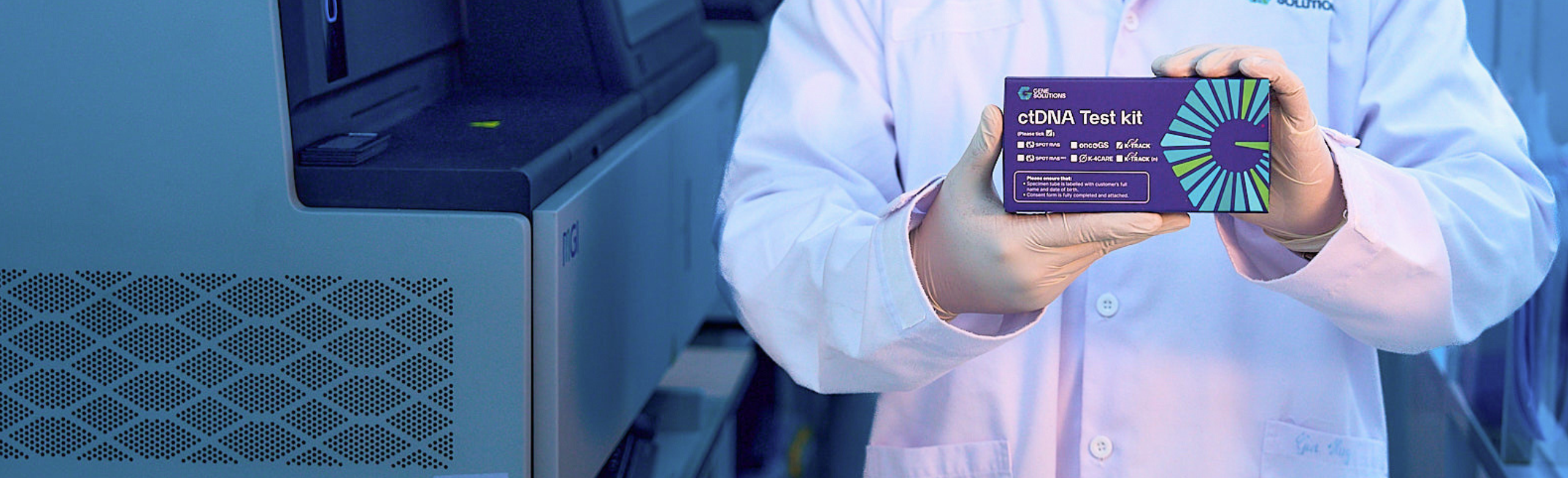

Beyond the FDA Breakthrough Device Designation: The Work Behind A Scientific Journey
A story told by Dr. Giang Hoa, Co-Founder of Gene Solutions
Written by Mia Vo, Head of Investor Relations, Mekong Capital
One Tuesday morning in August, I sat down with Dr. Giang Hoa, Co-Founder of Gene Solutions, to discuss a recent milestone for SPOT-MAS 10, the company’s multi-cancer early detection blood test.
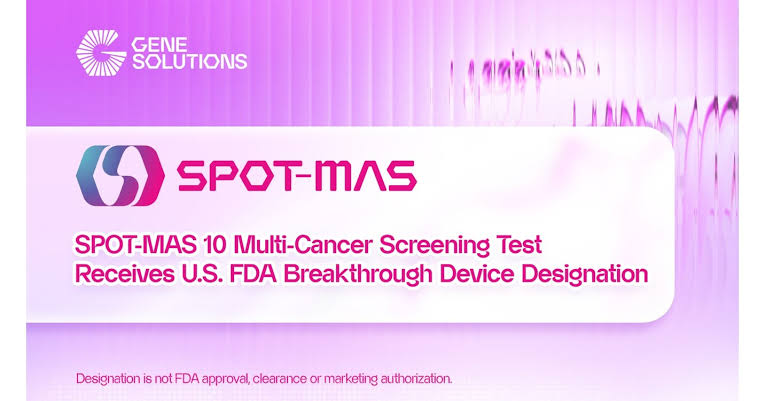
In May 2026, SPOT-MAS 10 received Breakthrough Device Designation from the U.S. Food and Drug Administration, or FDA.
Breakthrough Device Designation is not FDA approval, clearance, or marketing authorization. The designation recognizes that the device met the eligibility criteria for participation in FDA’s Breakthrough Devices Program and provides opportunities for more interactive and prioritized engagement with the agency as development continues.
The designation was the visible milestone. Less visible was the work required to bring together years of scientific research, clinical evidence, and organizational preparation.
I wanted to understand that work.
What had it taken to organize a complex body of evidence within a U.S. regulatory framework? What had the team learned from the process? And what did the experience reveal about the capabilities required to bring a genomic technology developed in Asia into new global scientific and regulatory environments?
Hoa smiled before answering. Over the next hour, he took me back to where the journey began, recounting the scientific work, evidence generation and cross-functional preparation that preceded the company’s first engagement with the FDA.
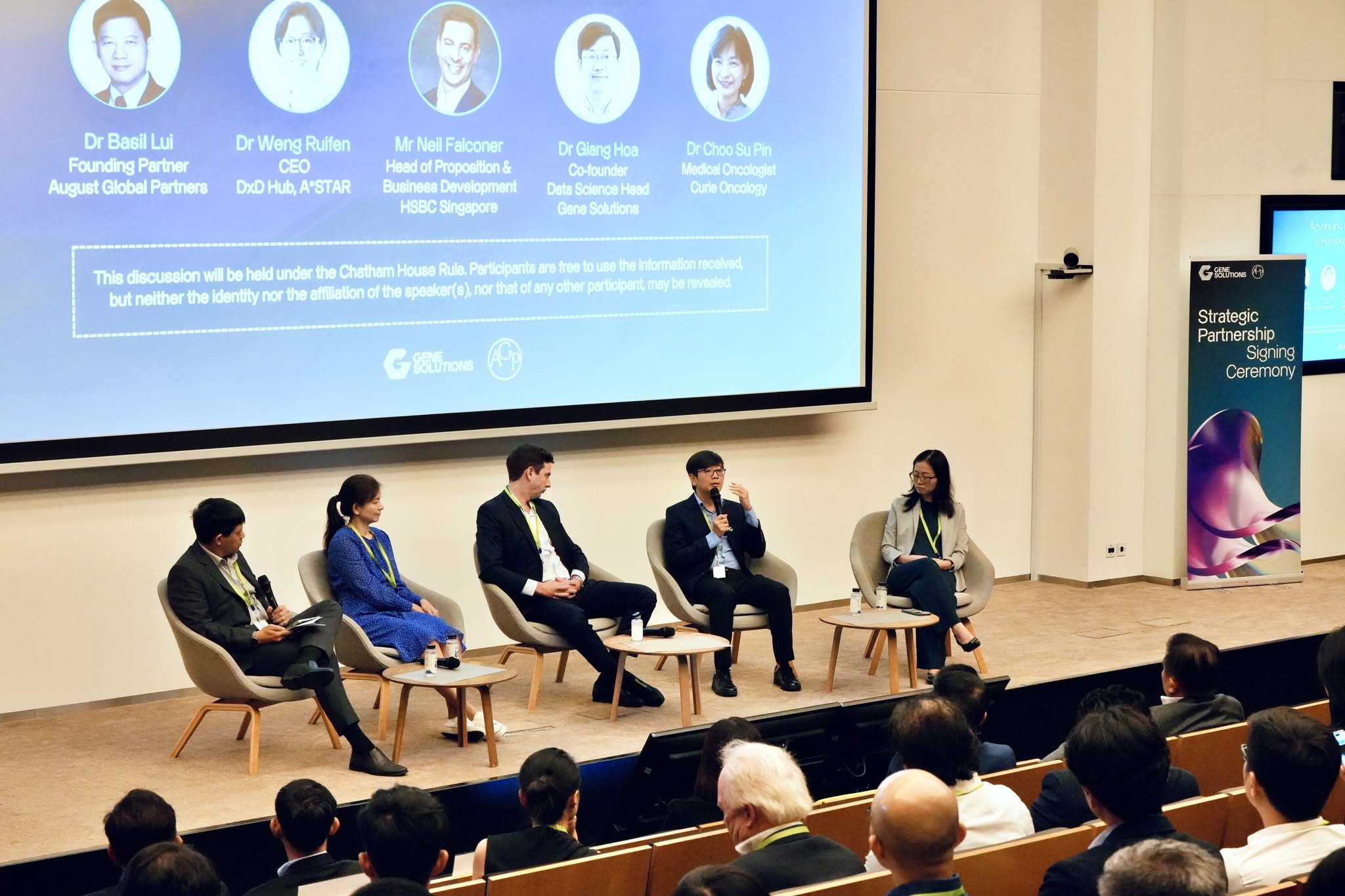
Dr. Giang Hoa (second one from the right), Co-Founder of Gene Solutions
A Scientific Journey That Began Years Earlier
“Where did this journey begin?” – I asked.
“If you ask me where this journey began, I would say it goes back much further,” Hoa said.
“Over the years, we continued to strengthen the technology behind SPOT-MAS, expand our clinical data, and work with partners across different markets in Asia. As our technology and evidence matured, the question became how we could bring that body of work into increasingly rigorous scientific and regulatory environments.
“If you want to go global, good science is essential. But you also need the systems, processes and organizational capabilities to demonstrate that science consistently.”
Since its founding in 2017, Gene Solutions has focused on developing precision technologies based on cell-free DNA to address healthcare needs in Asia and beyond. For SPOT-MAS, this meant continuing to develop the underlying technology, generate clinical evidence, and progressively strengthen the scientific and operational capabilities supporting the test.
The work did not follow a single path. It involved clinical studies, laboratory development, bioinformatics, data science, software development, quality systems, and collaboration with clinicians and research institutions.
By 2025, the conversation within Gene Solutions had evolved. Supported by prospective clinical validation, SPOT-MAS was already being introduced in hospital and clinic settings across Asian markets, including India, Singapore, Hong Kong SAR, Taiwan, Thailand, Malaysia, Indonesia, the Philippines and Vietnam. The next question was how the company could bring this growing body of scientific evidence and clinical experience into a U.S. regulatory framework.
For Hoa, pursuing Breakthrough Device Designation became a way to begin that engagement.
What Breakthrough Device Designation Means
In healthcare, the letters “FDA” carry significant weight, but they can also create confusion among those outside the regulatory field. FDA Breakthrough Device Designation is distinct from FDA marketing authorization.
The Breakthrough Devices Program is intended for certain medical devices that may provide more effective diagnosis or treatment of life-threatening or irreversibly debilitating diseases or conditions and meet other criteria established by the FDA. Participation in the program can provide opportunities for earlier and more interactive communication with the agency during device development and regulatory review. However, the designation does not constitute FDA approval, clearance or authorization to market the device in the United States.
For Hoa, communicating that distinction clearly was essential.
“For me, the value was not simply the designation itself,” he said. “It was the opportunity to present our technology, our proposed intended use and our supporting rationale within a formal FDA regulatory framework.”
“We had spent years developing the technology, generating evidence and building the quality and laboratory systems needed to support our work. This was our first engagement with the FDA, and the process helped us understand how to organize and communicate that body of work within a new regulatory context.”
The distinction also reflects an important principle in healthcare communication. Scientific progress should be communicated with precision about what the available evidence and regulatory status establish, as well as what they do not.
Bringing the Evidence Together
Preparing the initial Breakthrough Device Designation request took about six months.
The work required far more than summarizing the technology. The team had to explain SPOT-MAS 10‘s proposed intended use, the scientific rationale behind its multi-omic approach, the unmet clinical need it was intended, and the available analytical and clinical evidence supporting it.
They had to answer detailed questions: How had the test been evaluated? How was repeatability assessed? Why were specific study designs chosen? How were results generated, validated and documented? Every conclusion required traceable evidence and a clear scientific rationale.
The submission also needed to explain the software and bioinformatics behind the test, including how the analytical pipeline was developed, how data flowed through the system, and how each component contributed to the final result.
Teams across R&D, laboratory operations, bioinformatics, software, data science, quality, medical affairs, and regulatory affairs each held different parts of the evidence. The challenge was to integrate them into one coherent scientific and regulatory narrative.
“It was not enough for us to believe that the data were strong,” Hoa said. “We needed to make the evidence traceable and explain clearly how each conclusion had been reached.”
Although distinct from a full FDA marketing authorization review or inspection, the process prompted the organization to consider whether its science, analytical processes and documentation could be explained clearly and consistently.
Building Capability Across the Organization
For Hoa, the experience reshaped his view of regulatory capability.
Organizations cannot wait until they decide to engage a major regulator to build the necessary capabilities. Regulatory readiness develops over time through scientific rigor, robust documentation, quality systems and cross-functional accountability.
Many of these foundations had been in place since Gene Solutions was founded. Laboratory work established analytical expertise, clinical studies generated evidence, bioinformatics and data teams developed data-processing capabilities, and quality and regulatory teams strengthened documentation and risk management.
The Breakthrough Device Designation request brought these capabilities together. Decisions made in one function had to be understood and supported by evidence from another. Scientific, technical and regulatory explanations needed to align, assumptions were challenged, and gaps identified.
“It was an organizational exercise in scientific rigor,” Hoa said. “Every team needed to understand how its work contributed to the overall evidence.”
The process showed that regulatory readiness is not about producing more documentation. It is about creating clarity, consistency and traceability across the organization.
Learning from the first submission
When Gene Solutions submitted its first Breakthrough Device Designation request, the company did not receive the designation.
Looking back, Hoa believes that experience became an important part of the journey.
Based on the feedback received, the team concluded that the submission needed to be reorganized to address the designation criteria more directly and to present a complex body of evidence more clearly.
The scientific and regulatory expectations remained demanding. What changed was the team’s understanding of how to structure its rationale within the relevant framework.
Rather than treating the first outcome as the end of the process, the team used the feedback to rebuild the request.
Over the following six weeks, members of the organization reorganized the information, clarified the presentation of the evidence, and prepared a revised submission.
This time, SPOT-MAS 10 received Breakthrough Device Designation.
The decision marked an important moment for the team. It also made clear that the next phase of work was beginning.
The designation was not the end of the U.S. regulatory journey. It created a framework for further engagement as the company continued to consider the evidence and development activities that may be needed for a future marketing submission.
The Role of Scientific Debate
When I asked Hoa which part of the journey had stayed with him most, he did not immediately mention the designation.
He talked about the debates.
Different teams approached the preparation from different perspectives. The regulatory team wanted to ensure that the request was supported by sufficient evidence. Laboratory and research teams had to consider whether additional studies would materially strengthen the case, as well as the time and resources required to conduct them.
Dr. Nguyen Huu Nguyen, Co-Founder and Deputy CEO of Gene Solutions, often approached these discussions with a willingness to test new possibilities.
“Dr. Nguyen would often say, ‘Let’s try it,’” Hoa recalled.
“And I would usually be the person asking, ‘What evidence do we need, and what could go wrong?’”
Those different perspectives sometimes led to intense discussions. Looking back, Hoa believes the team needed both.

Dr. Nguyen Huu Nguyen – Co-Founder of Gene Solutions
Without people pushing the organization forward, some opportunities might have remained unexplored. Without people questioning assumptions and examining the evidence closely, the quality of the work could have been compromised.
“There were moments when people really challenged one another,” Hoa said. “But that friction made our thinking stronger. We learned that progress does not come from everyone having the same perspective. It comes from people being willing to debate, listen and then move in the same direction.”
The process reinforced that regulatory development is often a balancing act involving scientific rigor, operational feasibility, time, resources, and risk.
It was not a question of choosing one consideration over the others. The organization needed to understand each of them and make decisions that could be scientifically and operationally justified.
One Milestone in a Longer Scientific Journey
FDA Breakthrough Device Designation is an important milestone, but it is only one step in SPOT-MAS‘s broader scientific and clinical journey.
In 2025, Gene Solutions completed K-DETEK, a prospective validation study involving more than 9,000 asymptomatic participants across Asia. In May 2026, SPOT-MAS 10 received FDA Breakthrough Device Designation. Around the same time, the broader SPOT-MAS technology had been used by more than 100,000 individuals in real-world practice, with ongoing data contributing to scientific publications and presentations at international oncology conferences.
Each milestone represents a different form of evidence. Prospective validation, real-world experience, scientific publication, and regulatory designation each serve a distinct purpose and together build an evolving body of evidence supporting both the technology and the organization behind it.
Communicating the Test With Precision
SPOT-MAS 10 is a qualitative in vitro diagnostic test that analyzes methylation signatures and fragmentomic patterns in cell-free DNA using a machine learning algorithm. It is designed to detect cancer-associated signals as an adjunctive multi-cancer early detection test for asymptomatic adults aged 40 and above.
The test is intended to complement, not replace, guideline-recommended cancer screening. A negative result does not rule out cancer, while a positive result is not a diagnosis and requires physician-directed follow-up.
For Hoa, these limitations are fundamental to responsible communication.
“The more meaningful the technology may become, the more careful we need to be in how we describe it. We need to explain what the evidence shows, but we also need to be very clear about what it does not yet show.” He said.
Looking Ahead
As our conversation came to an end, I found myself thinking about what the designation represents when viewed beyond the milestone itself.
It does not mean that the regulatory journey is complete, and it does not replace the clinical studies, analytical evidence, and scientific work that must continue. What it does represent is an important point in the evolution of SPOT-MAS 10 and the organization behind it.
Years of research led to clinical validation. Clinical experience created opportunities to generate additional real-world evidence. International scientific engagement allowed the technology and its data to be examined and discussed within the broader oncology community.
The Breakthrough Device Designation request presented a different challenge. It required Gene Solutions to organize its technology, proposed intended use, supporting rationale, and available evidence within a formal U.S. regulatory framework.
Each stage has asked a different question.
Each question contributes to the next.
For Gene Solutions, the significance of Breakthrough Device Designation may therefore lie not only in receiving the designation, but also in the organizational learning that accompanied it.
The milestone shows that SPOT-MAS 10 met the eligibility criteria for FDA’s Breakthrough Devices Program. It also gives the company an opportunity for more interactive engagement with FDA as development continues.
“There is still a long road ahead. But this is an important stepping stone.” Hoa reflected.
For SPOT-MAS 10 and the team behind it, the journey continues through science, evidence, and the pursuit of meaningful impact in cancer care.

Dr. Nguyen (left), Dr. Giang Hoa (in the middle) and Dr. Nghia (right) – The three Co-Founders of Gene Solutions
Important Regulatory Information
SPOT-MAS 10 has received U.S. FDA Breakthrough Device Designation. Breakthrough Device Designation is not FDA approval, clearance or marketing authorization. The device remains subject to applicable FDA regulatory review requirements, and the designation does not guarantee future FDA approval, clearance or authorization.
Disclosure
Mekong Capital is an investor in Gene Solutions. This article is based on an interview with Dr. Giang Hoa and information provided by Gene Solutions. The views and reflections attributed to Dr. Hoa are his own. Regulatory and product descriptions should be read together with the important regulatory information above.



Leave a Reply